
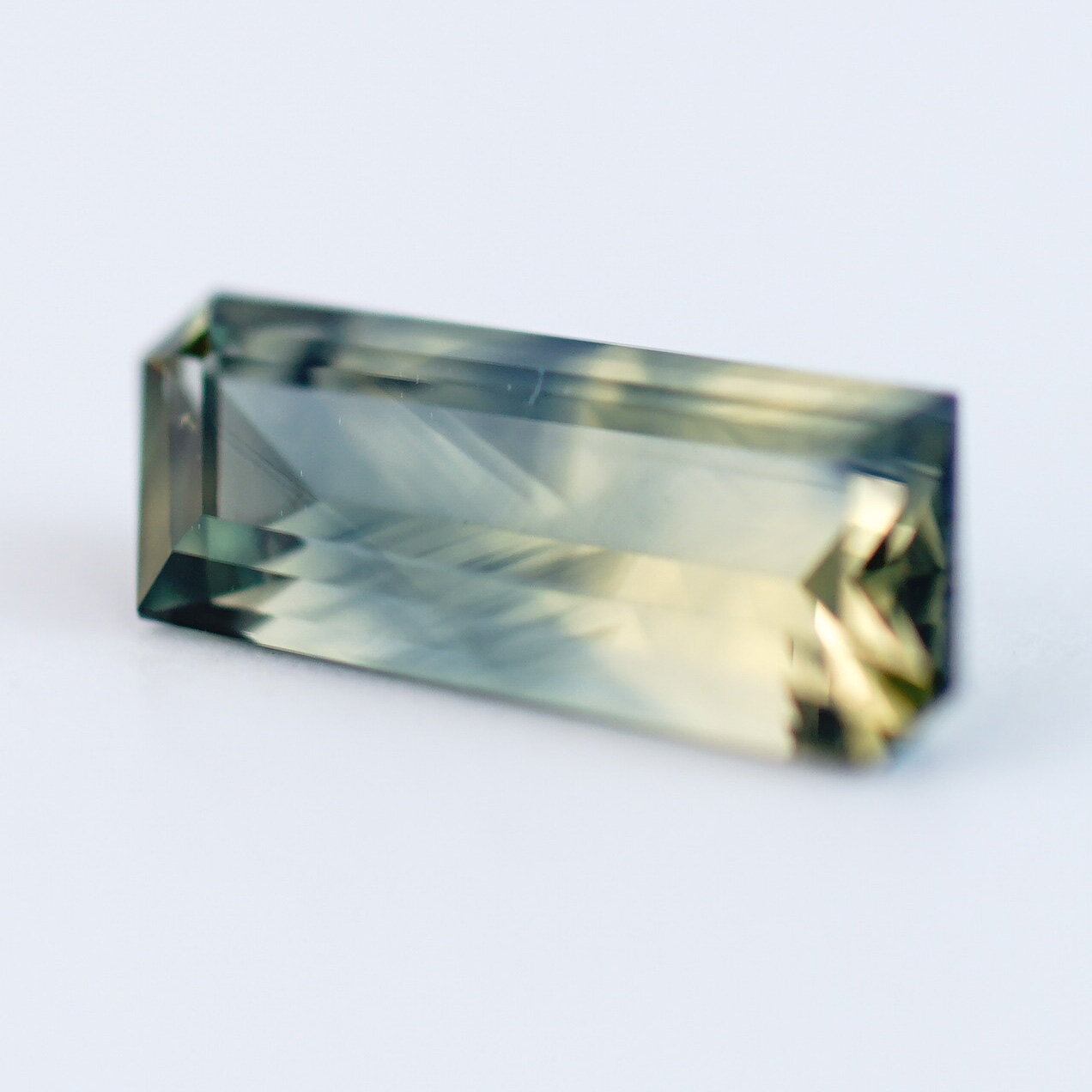
Stone to Style...Parti Sapphires
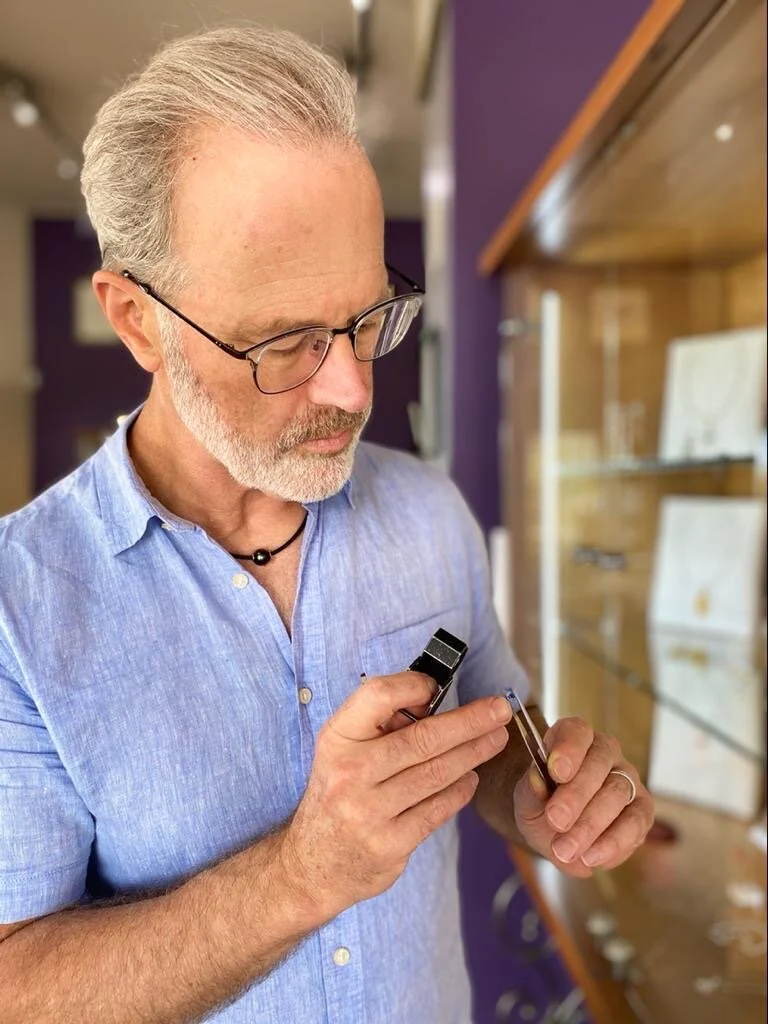
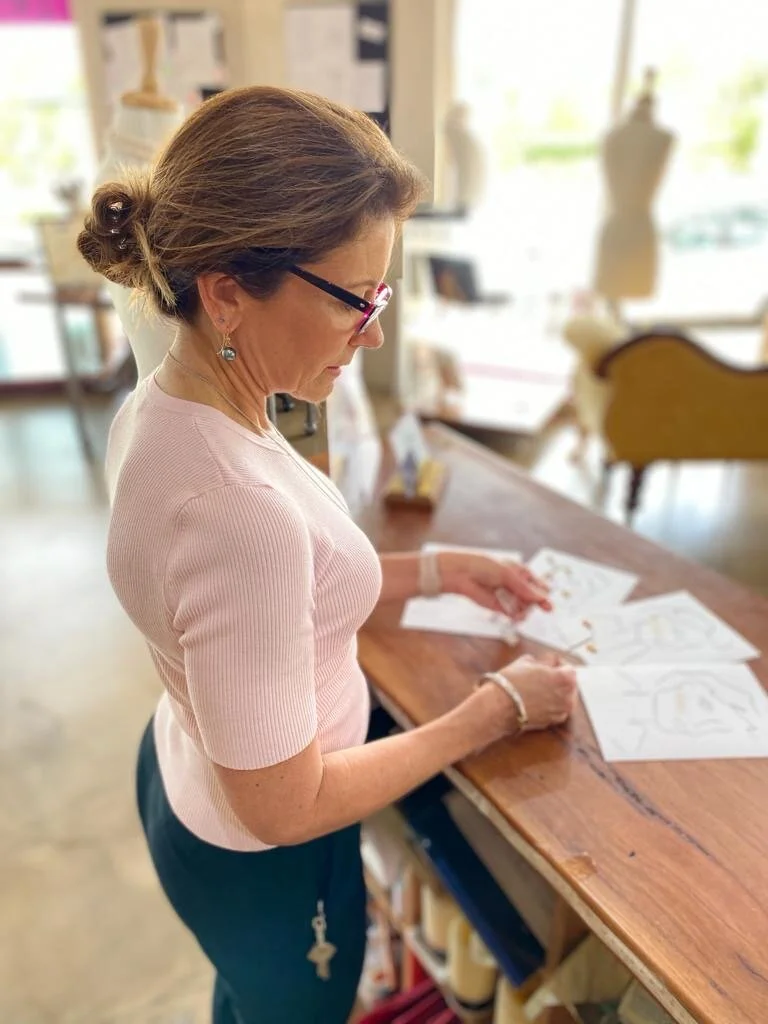
Today we are sitting down with Rob, UMUN Jewellery Studio’s resident gemmologist and Clarisse, Forge Chiffon’s jewellery stylist, to explore the ever-so-fascinating world of sapphires.
Rob and Clarisse, we have previously chatted about classic blue sapphires, but today I am interested in an extraordinary type of sapphire… the parti sapphire.
So let’s begin with the stone…
What is a parti sapphire and where are they mined?
A parti sapphire is a unique gemstone, perfect for those looking for something highly individual. It’s a sapphire that has two or three colours present within the one stone ie. partially coloured. Usually blue, green and yellow due to traces of iron and titanium oxide. Each one totally unique, just like a finger print. Parti sapphires are mainly mined in Australia, However they can also be found in Nigeria, Madagascar and Tanzania.

Which array of colours do they come in?
Usually blue, green and yellow. We also see brownish shades and golden tones.
Are parti sapphires natural or lab produced?
Natural, they are impossible to replicate via lab procedures.
How are they graded and what is their hardness?
Parti sapphires are graded like all other sapphires in terms of carat, cut and clarity, but it is the colour that sets them apart.
All sapphires are part of the corundum family, rating 9 on the Mohs Scale of Hardness, second to diamonds…so a hard gemstone and suitable for everyday wear.
Which cut best showcases the colour?
When selecting a parti sapphire you should choose it on its unique colour pattern rather than shape.
A parti sapphire needs to be cut by a experienced cutter who knows how to get the best out of the stone.
With their unusual colour zones, the gem cutter needs to be able to enhance the colours rather than worry about the carat weight so often we see them in unusual cuts compared to more typical sapphires.


Now onto style….
Which complexions would a parti sapphire best enhance and which metal would you set them in?
There are parti sapphires to suit every complexion.
They can be set in white, rose and yellow metal. Each stone has its own unique colour way so best to consider each one individually.
Which personal aesthetic do they suit and are there any particular colours you would suggest styling them with?
They are a great stone for nature lovers and individuals who like to be unique.
Muted hues and any natural hue will look the best.
With this said, which piece of jewellery would you set a parti sapphire in?
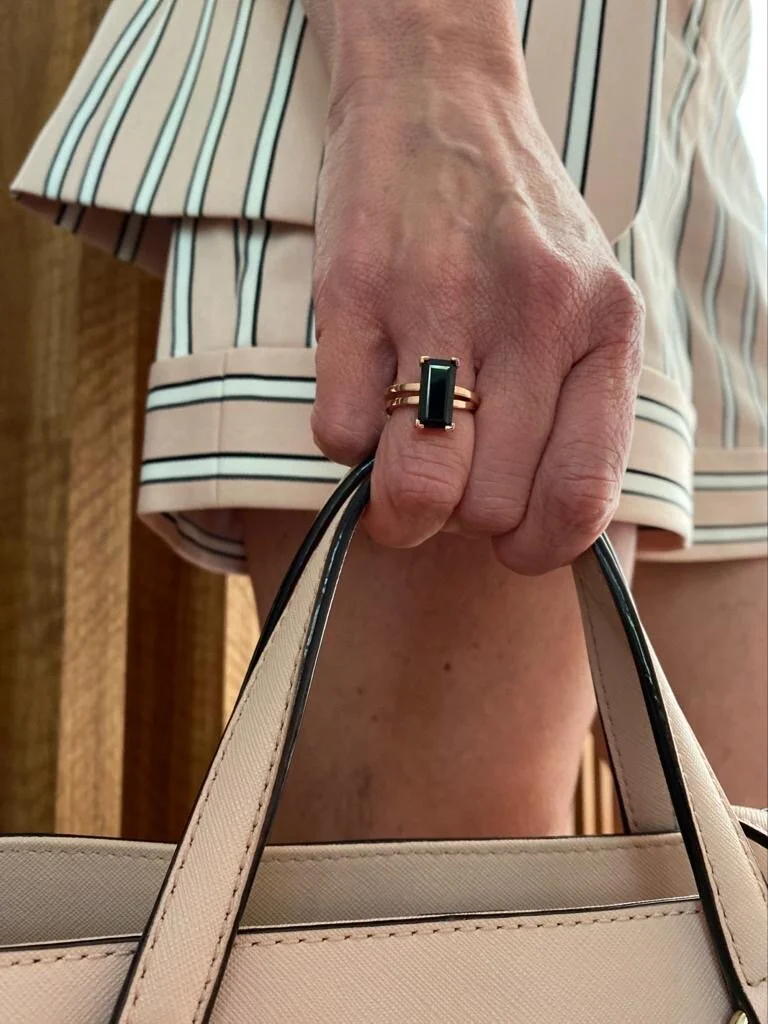
Because the parti sapphire is a hard gemstone, it’s very wearable for rings, earrings, pendants and bracelets.
I think a ring would be a great choice either dress ring or engagement ring. It’s also a great gemstone for the men!
From a style perspective would you suggest a solitaire setting or multi-stone setting for a parti sapphire?
Most of the time I would suggest a solitaire given that each stone is unique in its own right. Making them more challenging to mix together. However, if you are looking for something out of this world and you have the time to wait for the right stones to be found they can look truly amazing set together.
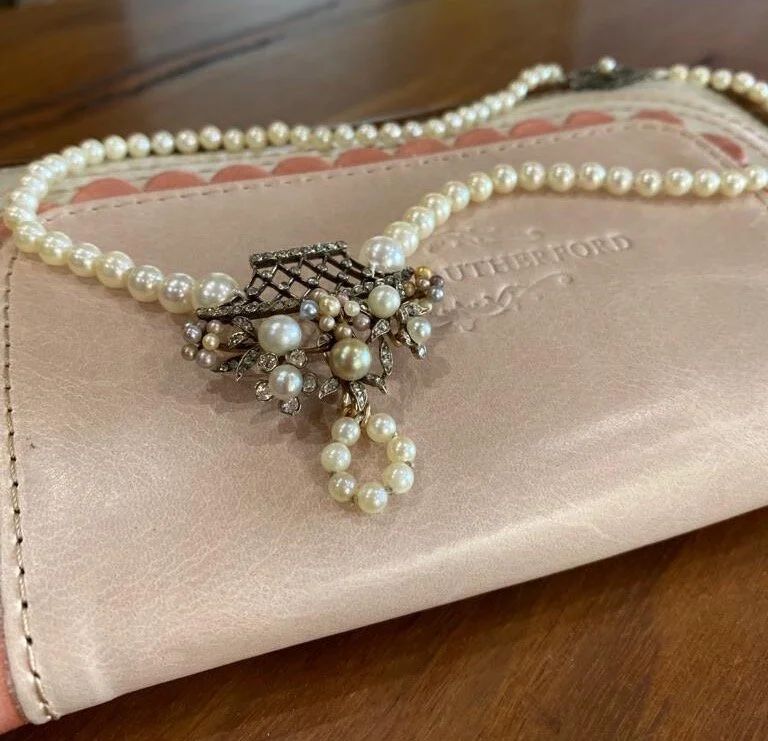
Also parti sapphires look great with pearls.

And lastly to wrap up today’s interview… I am now loving parti sapphires and would like to get something made! Where do I begin?
Book in an appointment, try to make it at around 2pm….this is the best time to view sapphires and let me show you the magic that these beautiful, unique gemstones hold.

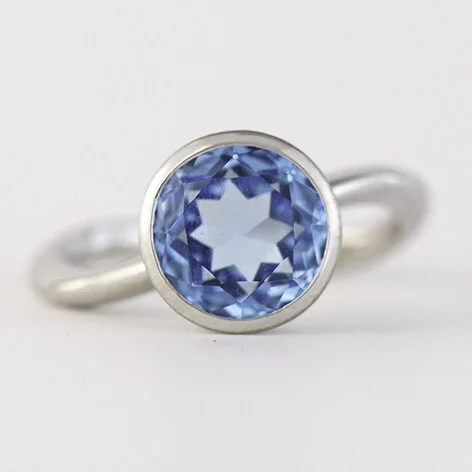
Talk to a Gemmologist... Classic Blue Gemstones
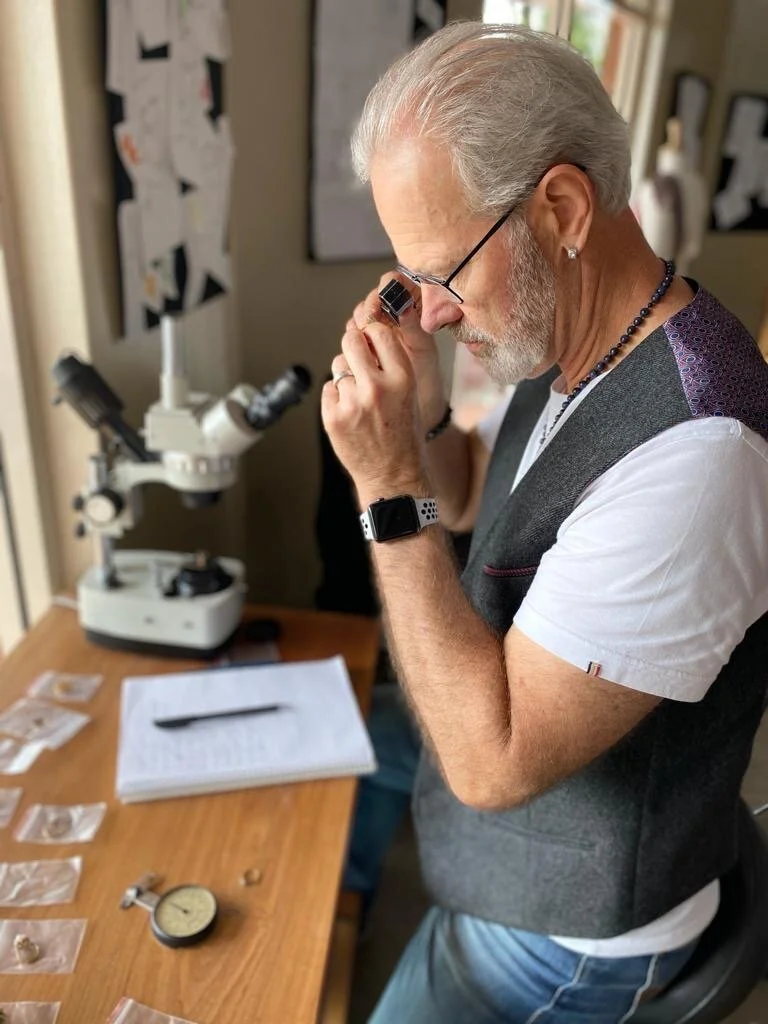
Today I’m pleased to be interviewing Rob, Umun Jewellery Studio’s resident gemmologist.
Today Rob, I would like to have a chat with you about gemstones and their origins.
I’m very aware that the world is full of beautiful gemstones in a wonderful array of colours but today I would really like to focus on the gemstones that come in or are close to this year’s pantone colour…Classic Blue. A hue that we are currently hearing a lot about in the design and fashion world.
Could you tell us here today which gemstones come in or are close to this classic hue?
There are a few so here we go, we have the extremely rare pure carbon-blue diamond, corundum-sapphires, zoisite-tanzanite, zircon, tourmaline and from the rock lazurite- lapis.

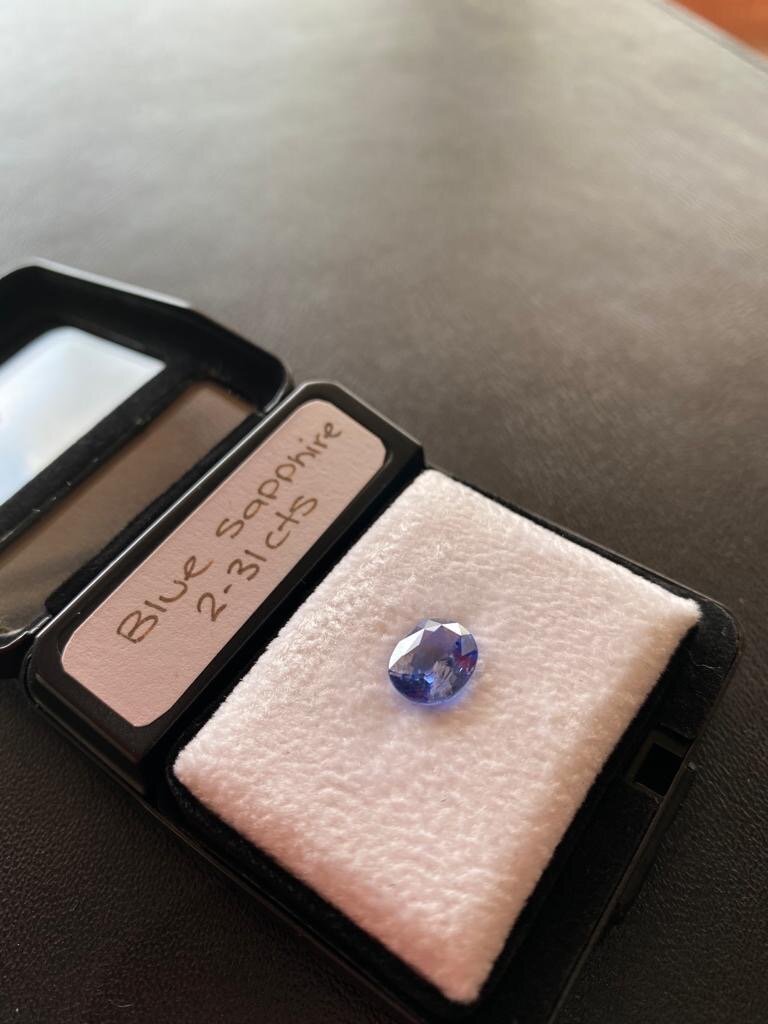
Where are these gemstones most likely to be mined?
Natural blue diamonds are extremely rare and have been mined in Russia.
Blue sapphires have been found in many countries, with significant deposits of the deepest blues found here in Australia in northern Queensland, though these are usually very dark shades of blue. Beautiful rich premium blues are found in Burma with Si Lanka being home to a wide range and possibly the most favoured of blues from cornflour to royal blue tones. More recently, Montana has come into the market with a wonderful array of blue sapphires, in a slightly different tone again which we are very keen to add to our collection.
Thailand also mines blue sapphires.
The vibrant tanzanite is found in only one place in the world and that’s Tanzania.
Zircon is very rare in classic blue though but has been discovered in Burma, Thailand, Si Lanka and Tanzania.
How about Tourmaline?
When tourmaline is blue it is known as Indicolite, has been found in Brazil and Sri Lanka but is rare in this shade.
Oop’s nearly forgot the beautiful Lapis Lazuli… Lapis is found mostly in Chilli and Afghanistan.
How do gemstones become blue?
Mmmm… the subject of colour is a vast and complex one but basically it all happens in the atomic structure, unique to each gemstone. For example the natural colour pigments in blue sapphire are iron (Fe) and titanium (Ti) that determine the gemstones blueness.
Is there differences in the hardness of the gemstones we are talking about here today?
Yes, there is, diamond is our hardest at 10, (on the Mohs scale of hardness) closely followed by sapphire at 9, then tanzanite, zircon and tourmaline are around 7 with lapis being the softest here today at 5.
Which of these beauties would you recommend if I wanted to have a dress ring designed and made? By the way I would really love to be able to wear this every day?
A blue diamond if you have the budget … haha . A blue sapphire is also perfectly fine.
Everything else is better for occasion wear.
Thanks for your time today Rob…

An important note before I sign off today… looking at all these gemstones and their ever so slightly different tones of blue, there is a blue for everyone from the depths of the hue to the tone of the hue. Make an appointment with Clarisse to discuss all things colour and find the blue for you, or make an appointment with Rob to discuss gemmology a little further!
Jewellery Spotlight : The Anklet
The Anklet….it’s time for this accessory to take the spotlight once again….
If you thought High waisted pants, Doc Marten boots, track pants were the only cult-favourite accessories experiencing a re-emergence from the ‘90s, you’ve now got one additional item to love and add to your accessory collection … the anklet.
Time for this gorgeous little accessory to have a second life… the anklet—once casually worn by the surf-obsessed, lover of the beach girl in either a strung shell type or braided leather.
It is one of those accessories which has once again been adopted with great fervour by the fashion set, the anklet is slowly creeping its way onto many street style regular’s ankles (particularly those of summer loving influences)
A once-forgotten accessory, the anklet in its second offering (AKA the fashion anklet) is no longer an insignificant piece worn south of the calf, just there and largely ignored. Instead, the new revised edition is to be worn to adorn the ankle, adding beauty and elevating any outfit and working it’s magic and enhancing our shoes from the simple thongs to the most exquisite evening heels.
We have even seen the anklet of today walk down the Spring/Summer 2020 runways, giving the trend credibility. To hanging off the back of chain-topped mesh heels, to anklets permanently attached to the shoes.
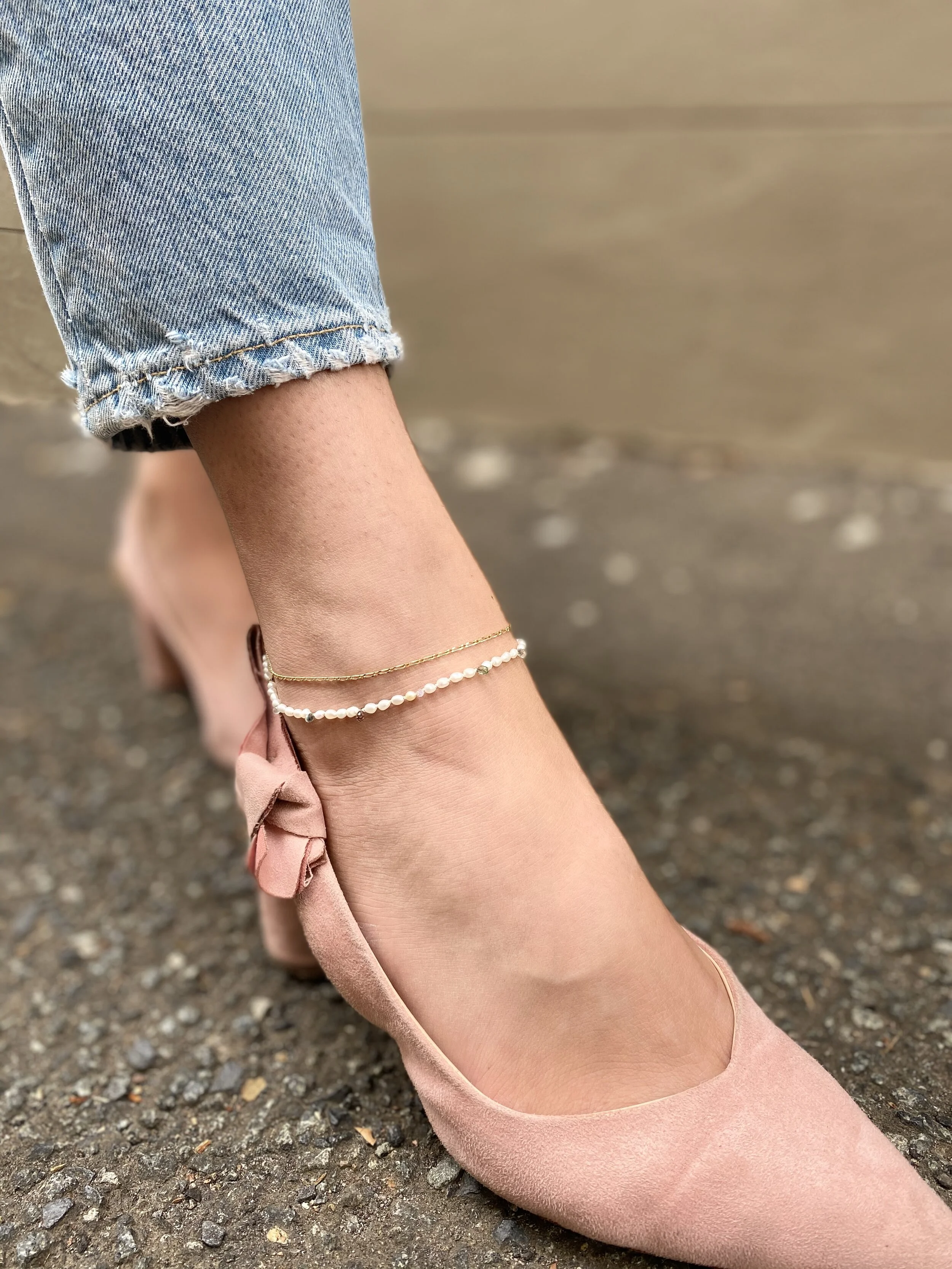
Today you will notice the Anklet in a number of styles beyond their dated counterparts. The fashion anklet—is predicted to become a mainstay piece within your summer 2020 wardrobes—from the daintiest of forms, from a fine chain, through to a slightly more substantial chain link or pearl-strung or even gemstone enhance styles. And for those surf loving girls who can’t quite part with their love of a shell-topped anklet, it is still very much a stylish option.
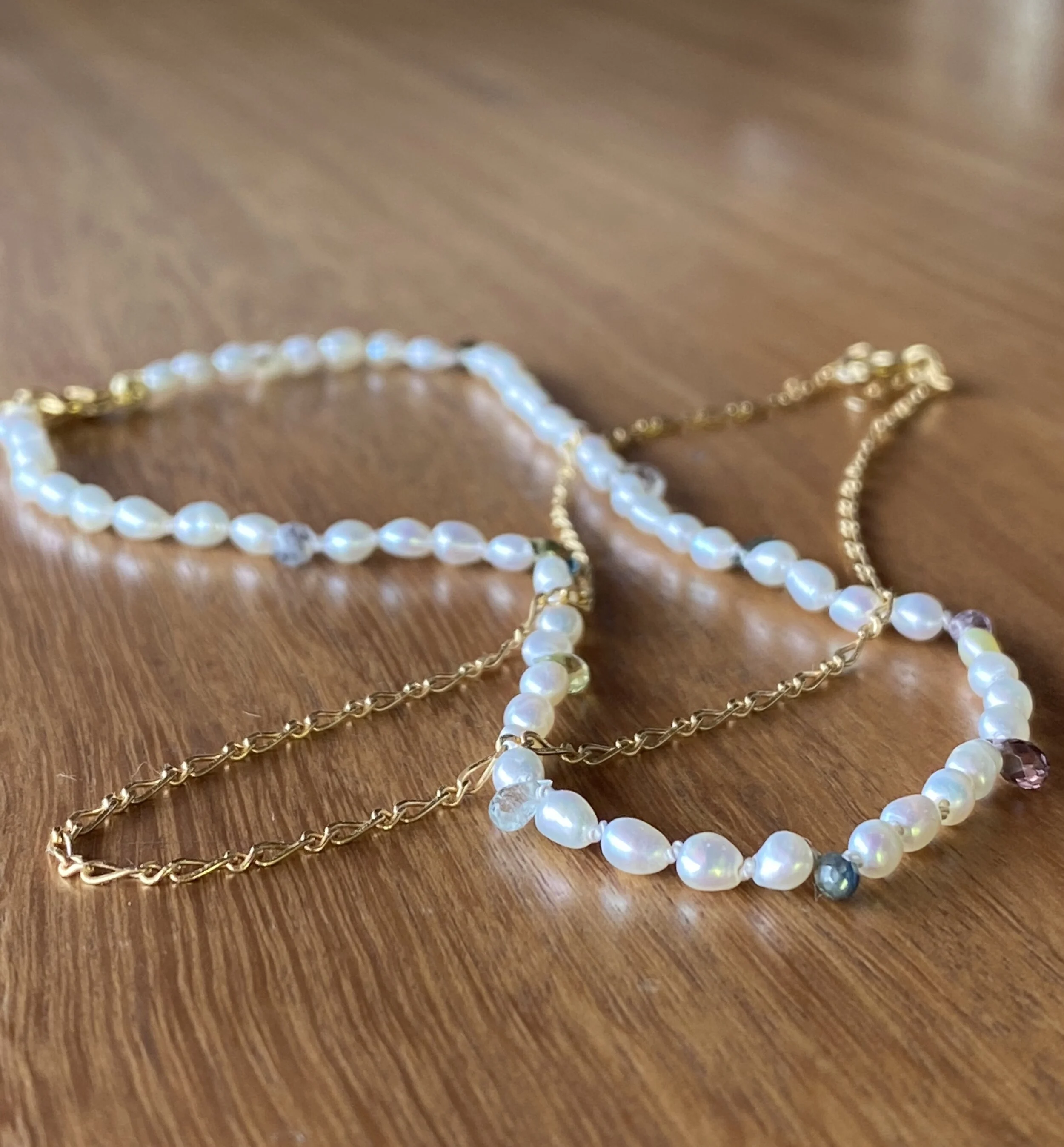

Pair the anklet with a strappy sandal, an upscale mule-style heel, a plain pump, or even a pair of thongs, the simplest styles instantly elevated in creativity to the most elegant of styles enhanced with glamour by adding this oh-so-now addition .
But just as we welcome the return of the anklet, we wouldn’t extend the same enthusiasm to other items of ‘90s foot-focused jewellery—toe rings can remain in their rightful place in the last decade.