

Reimagining Six Sided Purple
An Amethyst…hexagon…very large… a vibrant purple… reimagined.
From the direction of a stylist to the vision of a designer, to the knowledge of a gemmologist, to the finesse of a jeweller…
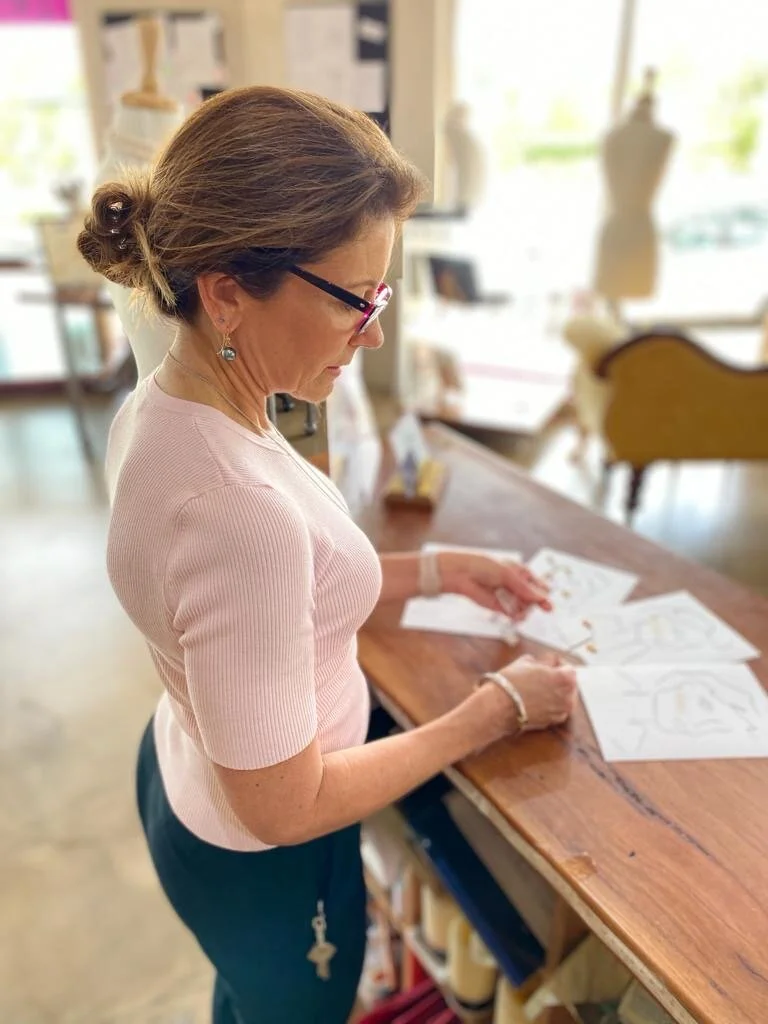
The time has come for this piece from the past… the beginning of something new…different but similar. Shedding the amethyst from its former mount, the jeweller gently removes the beautiful stone from its claws of a now unwearable brooch, destined to become a spectacular pendant to be worn and enjoyed. As pencil touches paper the design flourishes, classic with elegance and always wearable without restrictions. From the skill of our master jeweller, his hands and tools begin working the metal, layer on layer crafting an heirloom piece to last. As he gently pushes the claws over the amethyst and brightens with a final polish… a beautiful pendant emerges.

Let me just pause from this dreamy romantic moment and take you back to the beginning of reimagining purple through the eyes and knowledge of our gemmologist and master jeweller…. Rob.
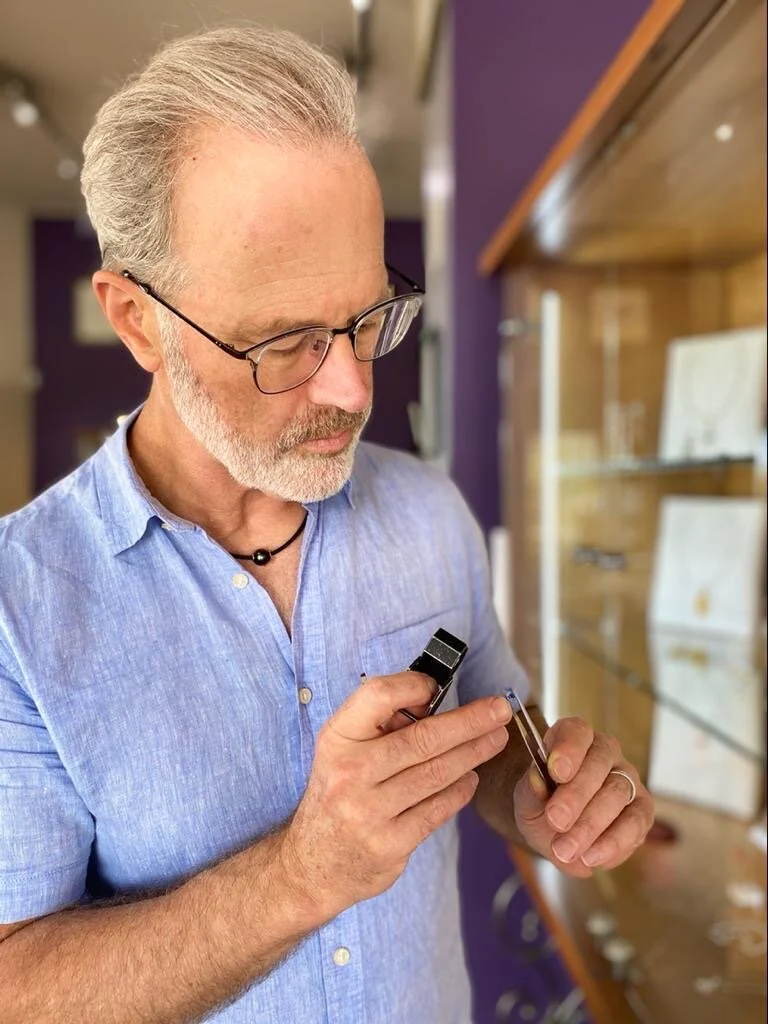
As I reflect back on my first encounter with the stone I am captivated by its beauty…. studying the manifest I am looking at a very large mid purple six sided shape, a 25mm diameter hexagon. As my hands glide over the surface, I feel a cool sensation, suggesting crystalline material with crisp cut edges as opposed to moulded faceting.
Upon closer examination using a 10 x loupe, “zebra stripes” and colour zoning are clearly visible. A refractive index reading of 1.545 confirms we have a natural amethyst!

With the gemmology diagnostic complete, identifying material properties and value… the gemstone is removed from its current saddle and I feel an uncanny immediate connection with the material and an excitement for the exploration of its latent content.

As design flows through a collaborative approach with our jewellery stylist and client, we embrace a classical design, working with just two symmetrical under rails and multiple claws for texture and stability, fixed to our signature bail.
The bearing rail, immediately below the girdle, shadows each of the six sides so they rest precisely, paramount for the future setting. The smaller lower rail provides space to the design, secured via four claws initially, positioned just below the culet to prevent the piece pivoting during exhibition. Our signature bail is fitted on the same plane as the lower rail, fixed solid to balance the large form for best performance.
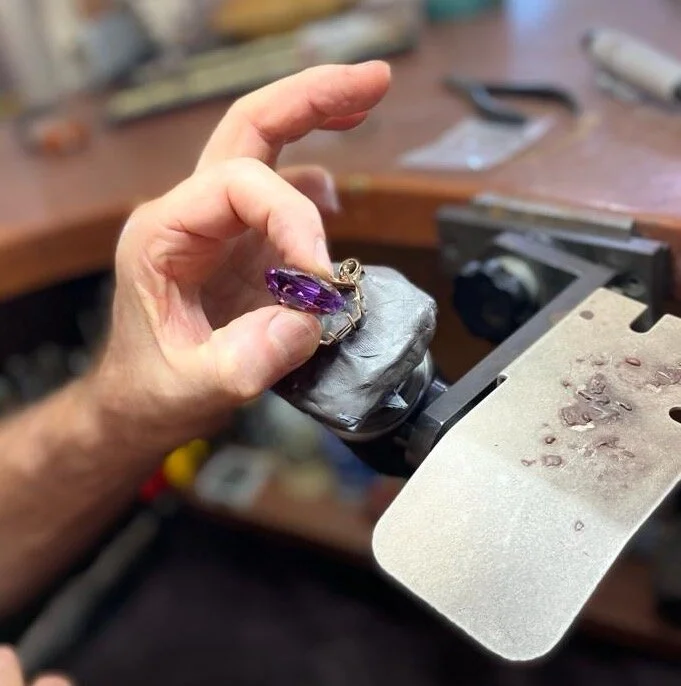
Assemblage complete…
The final preparation for the amethyst involves a flurry of shaving, burnishing and polishing the hexagonal skeletal form in much the same way a worker bee attends the hive. An appropriate analogy given this fundamental shape is prevalent in nature due to its efficiency in terms of space and materials. Concurrently equilateral and equiangular, a perfect compromise between circularity and angularity. Symbolism, the ideas and concepts, mood and emotion is a deeper conversation for another time…
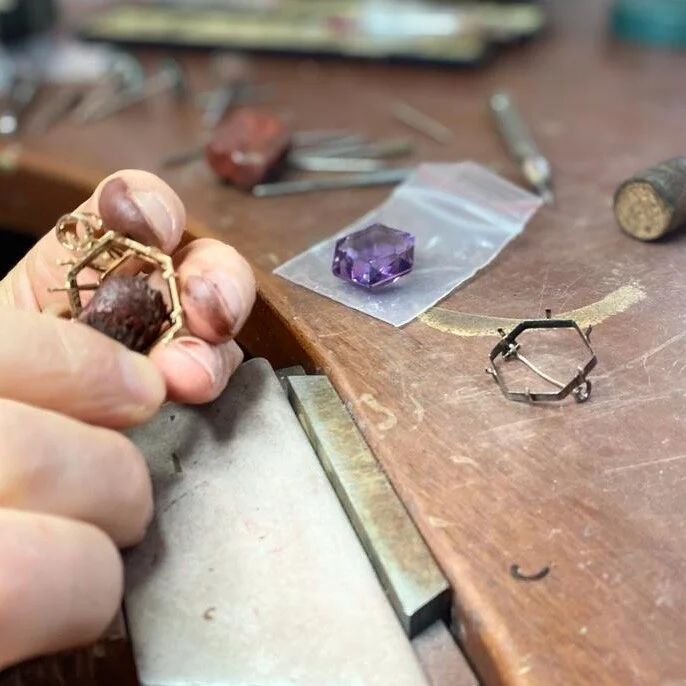
Finally, the spectacular stone is set… bracing with a wax mould to enable lateral pressure on the claws during setting. It can be tedious to remove when finished but is necessary for precise control. Each claw is marked and rebated for folding.
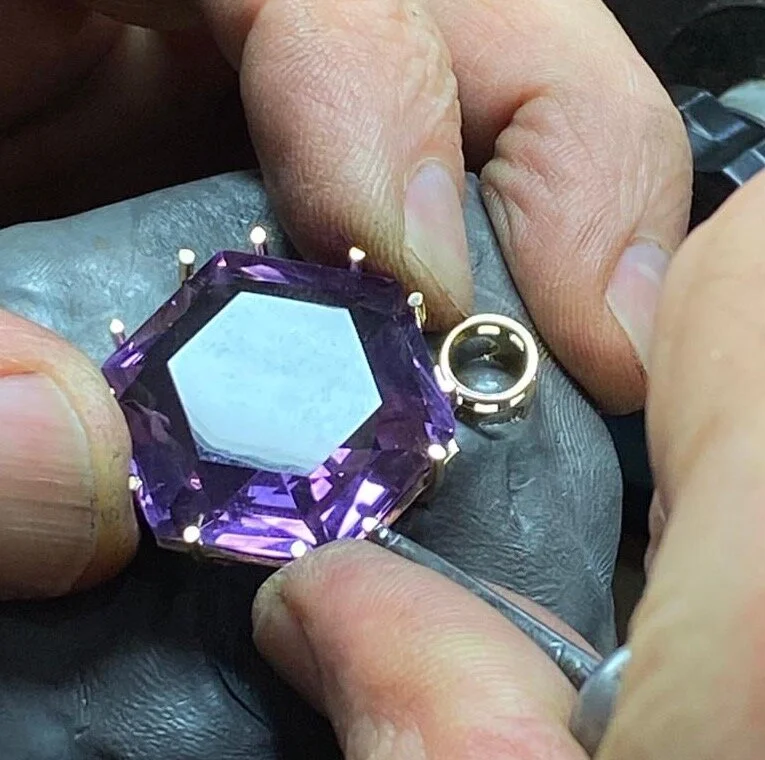
It’s another one of those euphoric moments as each of the twelve claws is encouraged onto the girdle and crown facet.
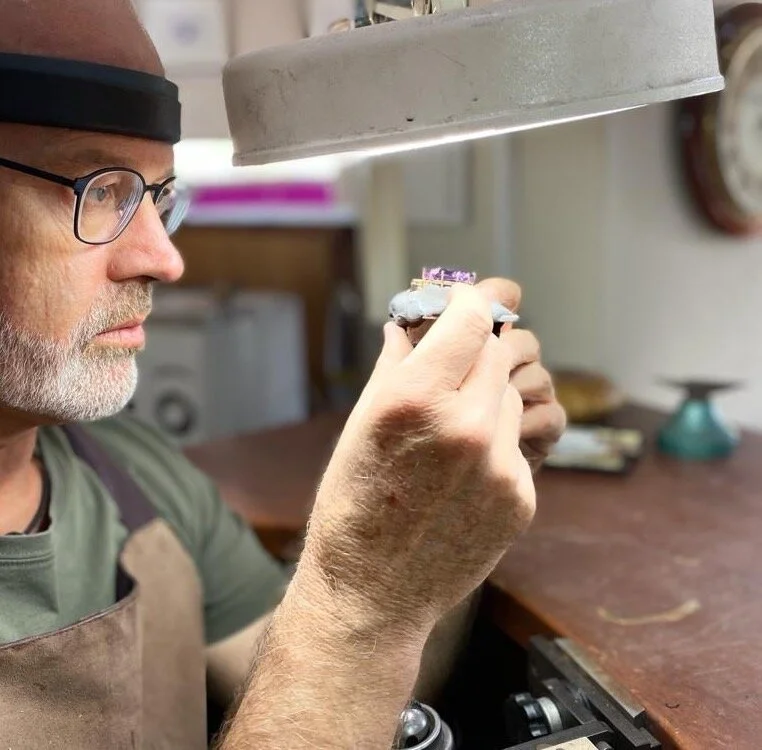
A final polish is the sign off from the artisan, confirming departure from the workshop but signalling the much-anticipated arrival to our creative, adept at styling.
Now embark on a voyage of discovery from classic to creative. Looks that can be worn to the most casual of occasions to the most formal of events. So here are just a few to get you curious…
A new adornment reimagined for individual aesthetic, ready to be styled and most importantly ready to be worn, not just sometimes but often.
As I hold the piece in my hand I begin to connect, admiring the simple yet intricate design, noticing how the twelve yellow gold claws not only hold the stone but add the important details that are needed in design to create a feminine yet timeless piece. Ideas of styling with this pendant to create fabulous looks now simply flow. The stone is a lovely shade of purple though slightly muted, making it neither warm nor cool but simultaneously warm and cool. A creative colour, a colour with many meanings from peace, luxury, ambition to creativity.
Gently dangling from a gold cable gives the pendant an elegant and classic style. A stylist tip…When a pendant is larger be cautious with the length, remember where the pendant finishes is where the eye stops, so if it’s too short it will shorten your neck length and silhouette.
Slip on a minimal top with a wardrobe staple pant or skirt to keep it classic, layer to enhance with a well cut jacket, think colour and make it bright. As the pendant is structured select a jacket made of a fabric that flows such as a silk blend, structured in cut.

By threading the pendant onto a longer chain or even layering it up with a couple of chains, perhaps in multiple hues is where the creativity begins. As well as adding a touch of uniqueness to your look, the longer chains work as an illusion to elongate the silhouette, which is always an advantage.
Think for this look a high-waisted pant or skirt in a block colour or floral with a cosy loose fitting knit, a pair of ankle boots or maybe an oh-so-now sneaker for extra comfort. Don’t forget to layer on a timeless trench coat before you leave the house. Still classically elegant while creative just with a casual feel and a touch of Audrey Hepburn.

An option for this piece as we dare to get more and more creative and one of my favourite looks… A kimono with intricate detail worn belted or loose over a slip dress and heels that wrap around the ankle and continue up the leg. Drop the pendant from a cable because this is where it needs to be, to be the hero of this look. Grab a sparkling sequin clutch, tousle your hair into a messy bun and there you have it….style perfection with creativity, colour and one amazing jewel…hexagon…purple and very large but perfect to complete.

Contact us and experience the extraordinary collaborative process of reimagining your jewels for YOUR individual aesthetic to wear on rotation.
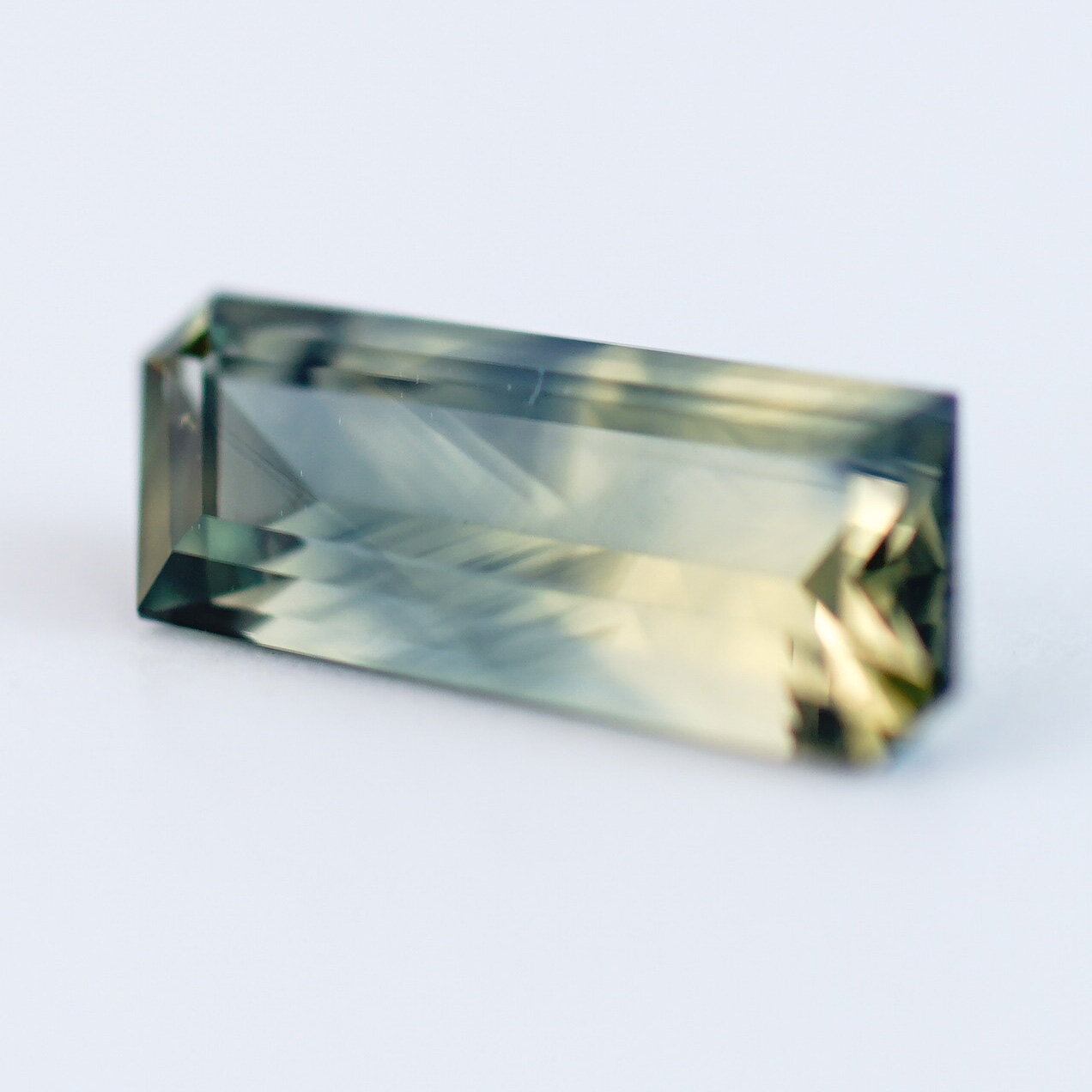
Stone to Style...Parti Sapphires
Today we are sitting down with Rob, UMUN Jewellery Studio’s resident gemmologist and Clarisse, Forge Chiffon’s jewellery stylist, to explore the ever-so-fascinating world of sapphires.
Rob and Clarisse, we have previously chatted about classic blue sapphires, but today I am interested in an extraordinary type of sapphire… the parti sapphire.
So let’s begin with the stone…
What is a parti sapphire and where are they mined?
A parti sapphire is a unique gemstone, perfect for those looking for something highly individual. It’s a sapphire that has two or three colours present within the one stone ie. partially coloured. Usually blue, green and yellow due to traces of iron and titanium oxide. Each one totally unique, just like a finger print. Parti sapphires are mainly mined in Australia, However they can also be found in Nigeria, Madagascar and Tanzania.

Which array of colours do they come in?
Usually blue, green and yellow. We also see brownish shades and golden tones.
Are parti sapphires natural or lab produced?
Natural, they are impossible to replicate via lab procedures.
How are they graded and what is their hardness?
Parti sapphires are graded like all other sapphires in terms of carat, cut and clarity, but it is the colour that sets them apart.
All sapphires are part of the corundum family, rating 9 on the Mohs Scale of Hardness, second to diamonds…so a hard gemstone and suitable for everyday wear.
Which cut best showcases the colour?
When selecting a parti sapphire you should choose it on its unique colour pattern rather than shape.
A parti sapphire needs to be cut by a experienced cutter who knows how to get the best out of the stone.
With their unusual colour zones, the gem cutter needs to be able to enhance the colours rather than worry about the carat weight so often we see them in unusual cuts compared to more typical sapphires.


Now onto style….
Which complexions would a parti sapphire best enhance and which metal would you set them in?
There are parti sapphires to suit every complexion.
They can be set in white, rose and yellow metal. Each stone has its own unique colour way so best to consider each one individually.
Which personal aesthetic do they suit and are there any particular colours you would suggest styling them with?
They are a great stone for nature lovers and individuals who like to be unique.
Muted hues and any natural hue will look the best.
With this said, which piece of jewellery would you set a parti sapphire in?
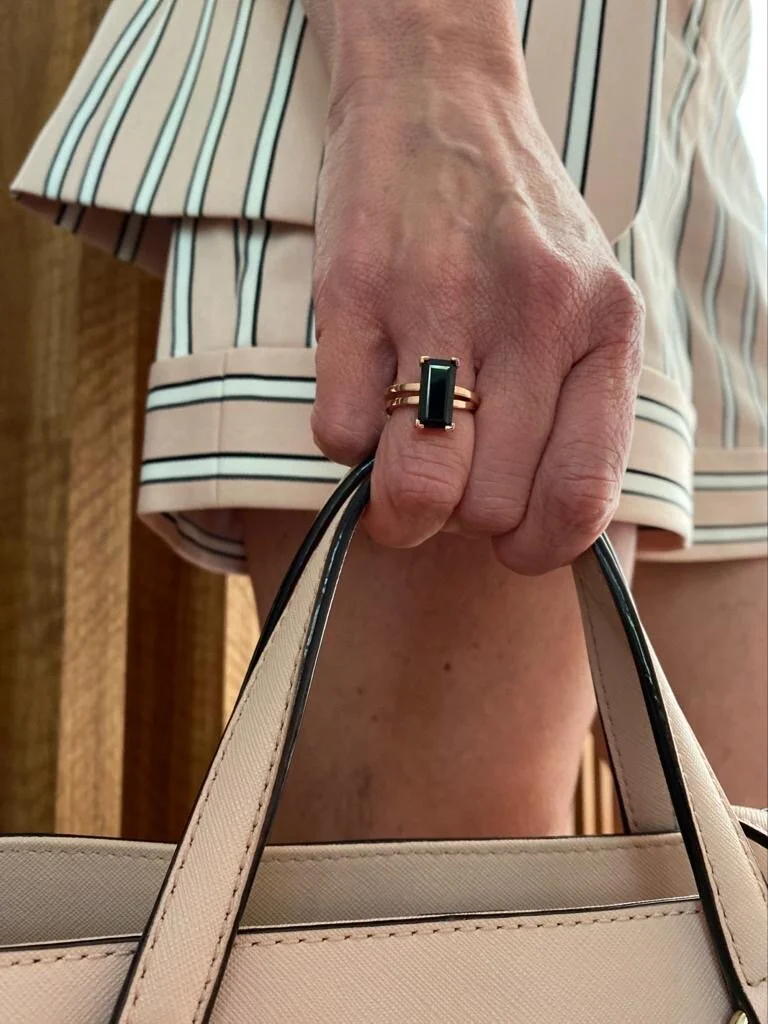
Because the parti sapphire is a hard gemstone, it’s very wearable for rings, earrings, pendants and bracelets.
I think a ring would be a great choice either dress ring or engagement ring. It’s also a great gemstone for the men!
From a style perspective would you suggest a solitaire setting or multi-stone setting for a parti sapphire?
Most of the time I would suggest a solitaire given that each stone is unique in its own right. Making them more challenging to mix together. However, if you are looking for something out of this world and you have the time to wait for the right stones to be found they can look truly amazing set together.
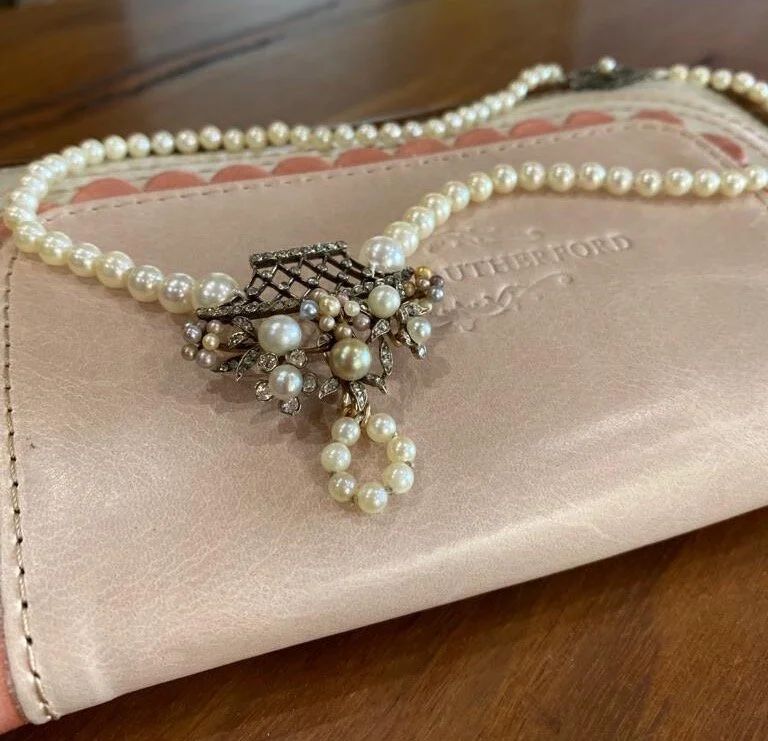
Also parti sapphires look great with pearls.

And lastly to wrap up today’s interview… I am now loving parti sapphires and would like to get something made! Where do I begin?
Book in an appointment, try to make it at around 2pm….this is the best time to view sapphires and let me show you the magic that these beautiful, unique gemstones hold.
Talk to a Gemmologist... Classic Blue Gemstones
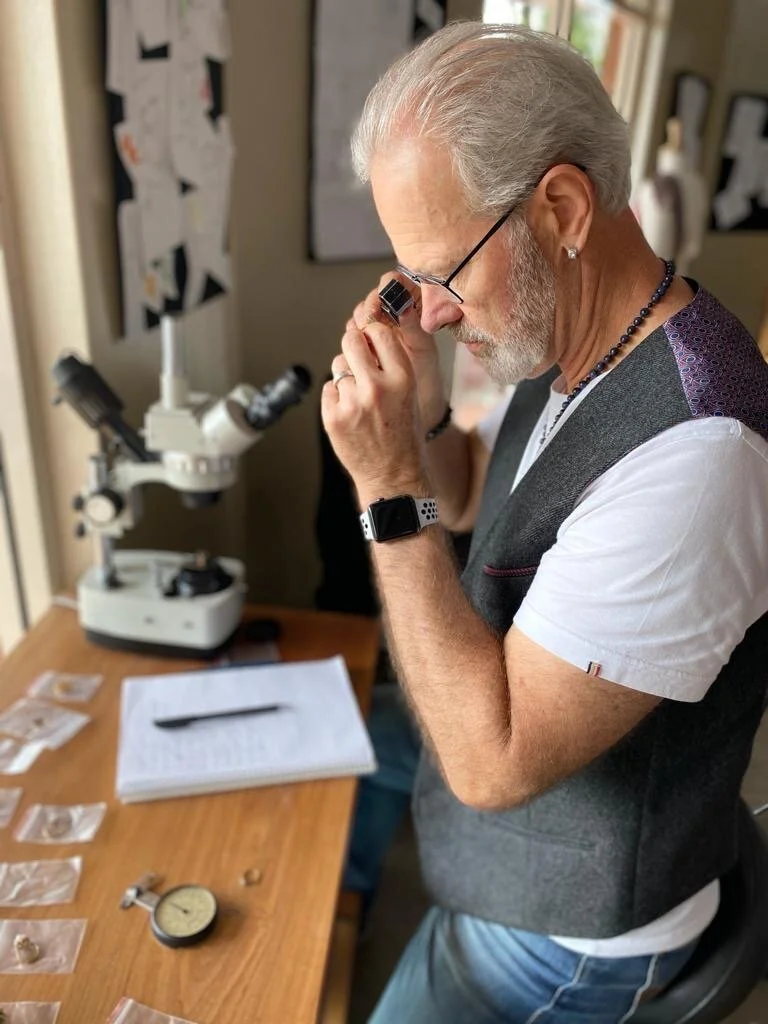
Today I’m pleased to be interviewing Rob, Umun Jewellery Studio’s resident gemmologist.
Today Rob, I would like to have a chat with you about gemstones and their origins.
I’m very aware that the world is full of beautiful gemstones in a wonderful array of colours but today I would really like to focus on the gemstones that come in or are close to this year’s pantone colour…Classic Blue. A hue that we are currently hearing a lot about in the design and fashion world.
Could you tell us here today which gemstones come in or are close to this classic hue?
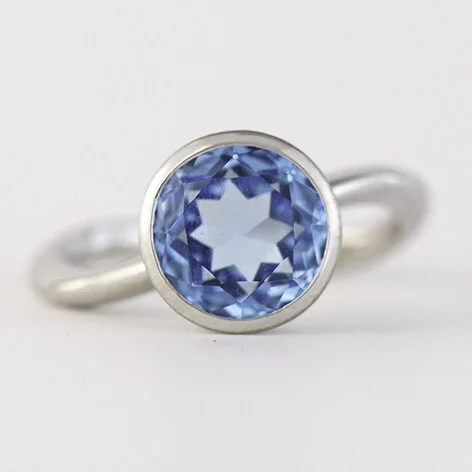
There are a few so here we go, we have the extremely rare pure carbon-blue diamond, corundum-sapphires, zoisite-tanzanite, zircon, tourmaline and from the rock lazurite- lapis.

Where are these gemstones most likely to be mined?
Natural blue diamonds are extremely rare and have been mined in Russia.
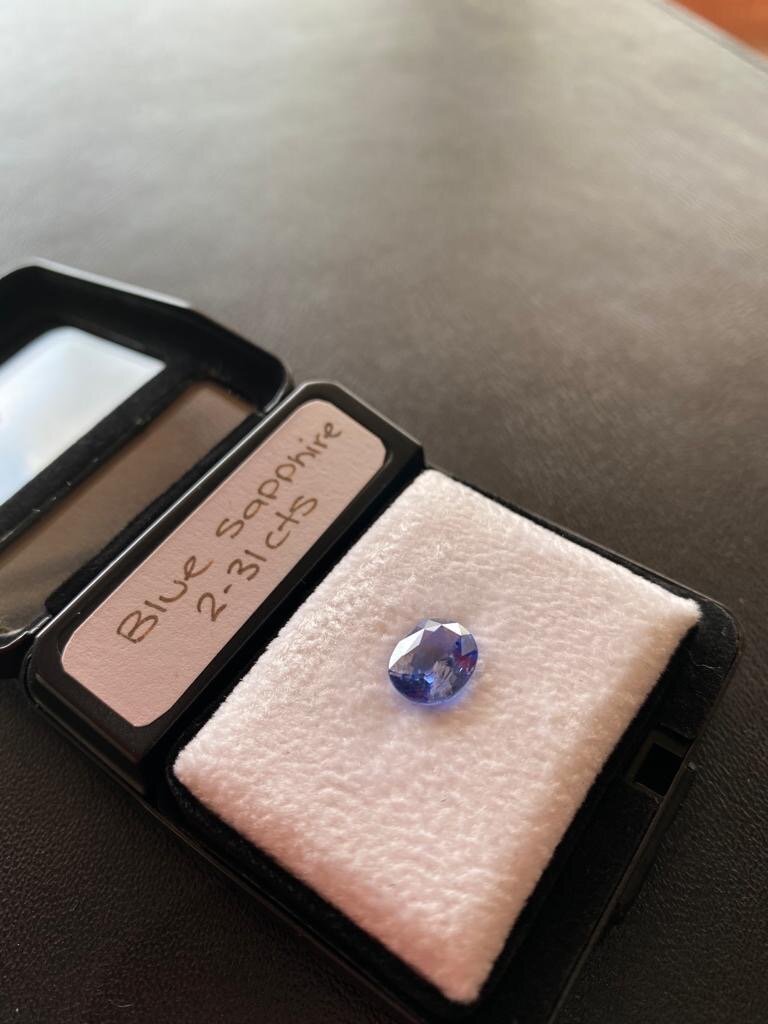
Blue sapphires have been found in many countries, with significant deposits of the deepest blues found here in Australia in northern Queensland, though these are usually very dark shades of blue. Beautiful rich premium blues are found in Burma with Si Lanka being home to a wide range and possibly the most favoured of blues from cornflour to royal blue tones. More recently, Montana has come into the market with a wonderful array of blue sapphires, in a slightly different tone again which we are very keen to add to our collection.
Thailand also mines blue sapphires.
The vibrant tanzanite is found in only one place in the world and that’s Tanzania.
Zircon is very rare in classic blue though but has been discovered in Burma, Thailand, Si Lanka and Tanzania.
How about Tourmaline?
When tourmaline is blue it is known as Indicolite, has been found in Brazil and Sri Lanka but is rare in this shade.
Oop’s nearly forgot the beautiful Lapis Lazuli… Lapis is found mostly in Chilli and Afghanistan.
How do gemstones become blue?
Mmmm… the subject of colour is a vast and complex one but basically it all happens in the atomic structure, unique to each gemstone. For example the natural colour pigments in blue sapphire are iron (Fe) and titanium (Ti) that determine the gemstones blueness.
Is there differences in the hardness of the gemstones we are talking about here today?
Yes, there is, diamond is our hardest at 10, (on the Mohs scale of hardness) closely followed by sapphire at 9, then tanzanite, zircon and tourmaline are around 7 with lapis being the softest here today at 5.
Which of these beauties would you recommend if I wanted to have a dress ring designed and made? By the way I would really love to be able to wear this every day?
A blue diamond if you have the budget … haha . A blue sapphire is also perfectly fine.
Everything else is better for occasion wear.
Thanks for your time today Rob…

An important note before I sign off today… looking at all these gemstones and their ever so slightly different tones of blue, there is a blue for everyone from the depths of the hue to the tone of the hue. Make an appointment with Clarisse to discuss all things colour and find the blue for you, or make an appointment with Rob to discuss gemmology a little further!